Skip to product information
1 of 7

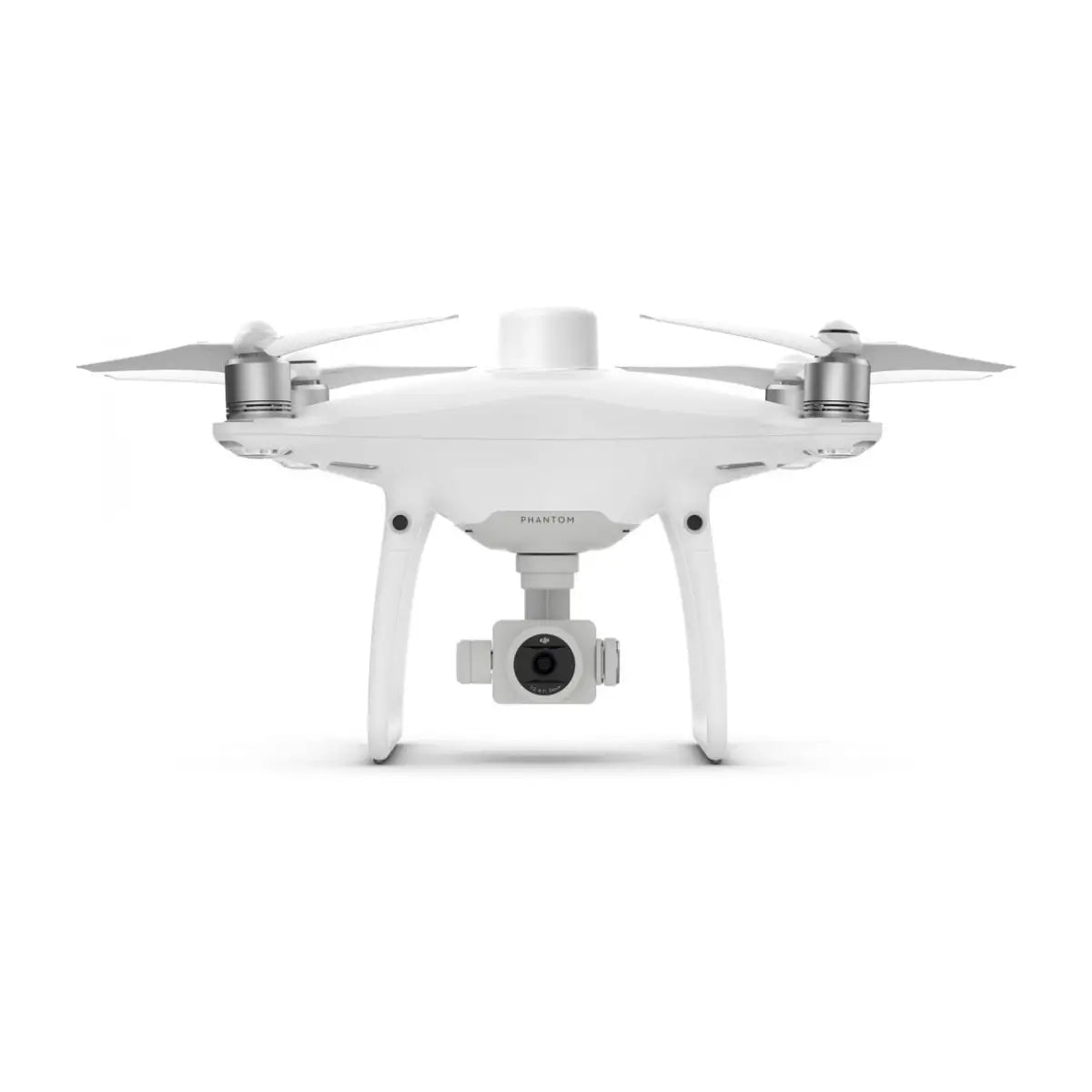
DJI Phantom 4 RTK (S) with 1x Aftermarket Battery

DJI Phantom 4 RTK (S) with 1x Aftermarket Battery

Regular price $4,499.00
Regular price $5,900.00 Sale price $4,499.00
Sale Sold out
SKU S-DJI-P4RTK-NBS MPN S-DJI-P4RTK-NBS EAN 6958265168642
  • Integrated RTK module delivers centimeter-level mapping accuracy
  • Mechanical-shutter camera prevents distortion during survey flights
  • TimeSync aligns metadata precisely with camera exposure
  • One-inch sensor captures detailed photogrammetry imagery
  • OcuSync transmission provides stable long-range HD visibility
  • GS RTK app supports automated mapping mission modes
  • Aftermarket battery extends operational time in field
  • Compatible with D-RTK 2 for enhanced precision
  • NTRIP corrections supported through hotspot or 4G
  • Complete mapping solution when used with DJI Terra

NOTE: Package DOES NOT include Base Station

View full details
  • Description
  • Specifications
  • In the Box
  • FAQ

DJI Phantom 4 RTK (S): Precision mapping with integrated RTK positioning

The DJI Phantom 4 RTK (S) provides a dependable, survey-grade mapping solution engineered for teams requiring fast deployment and high positional accuracy. This new drone-only kit includes the aircraft, standard controller, charging hub, calibrated camera system, spare propellers, WB37 modules, and an additional aftermarket Phantom 4 battery for extended mission support.

Built for integrated photogrammetry workflows, the Phantom 4 RTK (S) minimizes ground control requirements while capturing centimeter-level image metadata for accurate modeling and mapping across diverse operational environments.

Advanced synchronization and imaging technology deliver consistent, high-accuracy results

DJI’s TimeSync architecture ensures every image is precisely synchronized with the RTK module and flight controller, producing reliable geotag accuracy across mission datasets. The 20-megapixel mechanical-shutter camera reduces distortion during motion, supporting repeatable flight lines and consistent ground sampling resolution. OcuSync transmission maintains stable HD downlink visibility over long distances, improving situational awareness.

When used with DJI Terra, the Phantom 4 RTK (S) forms a fully integrated workflow that generates dependable survey models without the error typically introduced by rolling shutter or misaligned metadata.

Field-ready performance enhances mapping efficiency in demanding environments

The Phantom 4 RTK (S) supports flexible RTK configurations, including NTRIP connectivity and interoperability with the D-RTK 2 Mobile Station. The aircraft’s stable flight characteristics, optimized photogrammetric capabilities, and intuitive mission planning tools enable operators to execute mapping flights quickly while maintaining accuracy.

This performance-driven system helps professionals reduce re-flights, simplify field operations, and generate consistently usable deliverables across surveying, construction, environmental analysis, and asset-inspection missions.

Key features of the Phantom 4 RTK

  • Integrated RTK Module: The Phantom 4 RTK includes an integrated RTK positioning system that delivers real-time, centimeter-level accuracy. Combined with DJI’s TimeSync system, the aircraft continuously aligns the flight controller, camera, and RTK module, ensuring highly precise geospatial data for surveying and mapping tasks.
  • High-Resolution CMOS Sensor: A 1-inch, 20-megapixel CMOS sensor enables the Phantom 4 RTK to capture high-detail imagery suitable for professional photogrammetry workloads. At a 100-meter flight altitude, it achieves a ground sample distance (GSD) of approximately 2.74 cm, supporting accurate 2D and 3D model generation.
  • Optimized Data Collection: The system outputs standardized image and metadata formats compatible with major photogrammetry platforms. While RTK provides high accuracy during flight, the aircraft also supports Post Processed Kinematics (PPK) workflows using third-party post-processing tools, allowing survey teams to further refine positional accuracy when required.

Benefits of the DJI Phantom 4 RTK

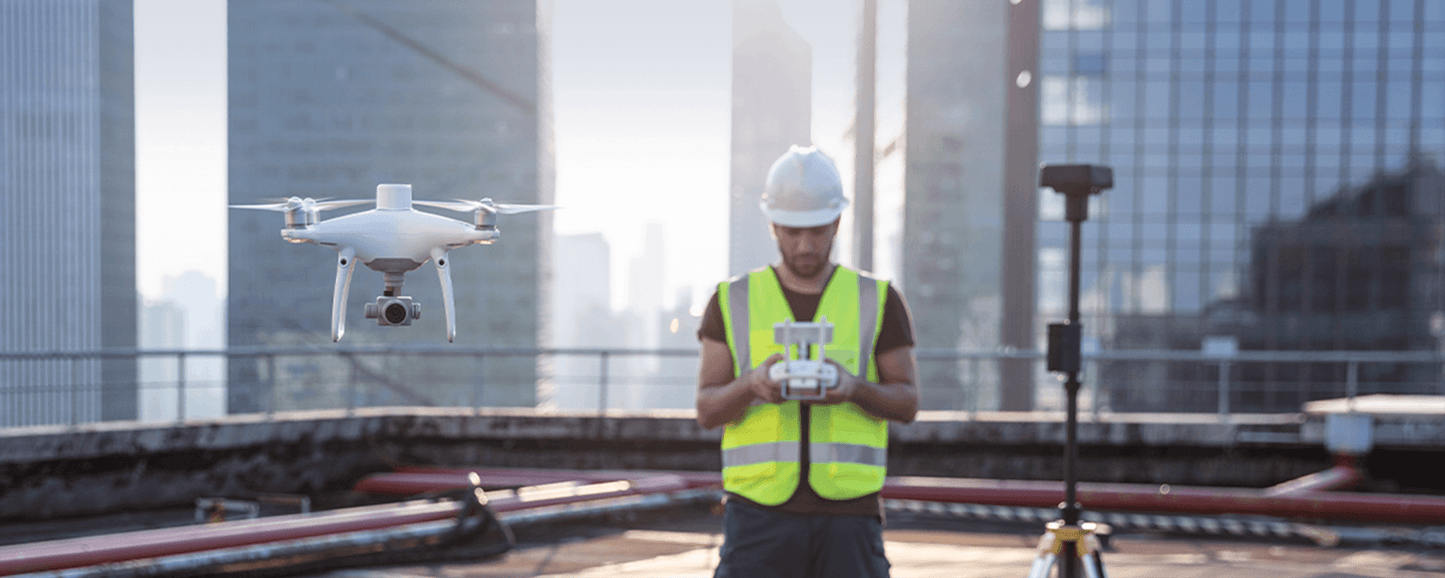
  • Versatility Across Multiple Industries: The Phantom 4 RTK supports a wide range of professional applications, including land surveying, construction site documentation, agricultural monitoring, and municipal or urban planning. Its adaptable workflow and mission-planning features make it a dependable tool for teams that require accurate aerial data across diverse environments.
  • High-Accuracy Mapping Results: With precise RTK positioning, TimeSync calibration, and a high-resolution camera, the Phantom 4 RTK delivers reliable and repeatable mapping outputs. When used with appropriate survey control and post-processing workflows, it enables professionals to achieve mapping accuracy suitable for demanding project requirements and industry-standard deliverables.

Industry Applications

  • Construction mapping: captures accurate terrain models for site planning.
  • Surveying projects: delivers precise georeferenced data with reduced GCPS.
  • Mining measurements: collects images suitable for volumetric calculation.
  • Infrastructure documentation: supports repeatable flight paths for inspection.
  • Utility corridor mapping: enables consistent long-line route imaging.
  • Environmental studies: documents landscapes for long-term monitoring.
  • Agricultural field analysis: provides detailed imagery for crop assessment.
  • Municipal planning: supports high-quality imaging for development projects.
  • Emergency response mapping: records affected areas for situational planning.
  • Waterway and shoreline surveys: enables detailed topographic assessments.

Engineered for enterprise performance

The Phantom 4 RTK (S) is built to support professional operations that require precise geolocation, consistent imaging performance, and strong system reliability. Its RTK architecture delivers dependable positional accuracy, while TimeSync maintains critical alignment between the camera and navigation systems.

The aircraft integrates seamlessly into enterprise workflows through DJI Terra, GNSS data recording, and broad compatibility with correction sources, making it an efficient tool for high-accuracy aerial data capture.

The Phantom 4 RTK (S) provides long-term operational value for enterprise users who require reliable, repeatable, and survey-grade imaging capabilities. Its advanced positioning system and stable aerial platform make it a dependable choice for professional mapping missions.

Dronefly is the West Coast’s trusted enterprise UAV partner, providing authorized support, training, and technical guidance for professional operators. Order from Dronefly today to deploy this proven mapping platform.

Aircraft

  • Takeoff weight: 1391 g
  • Diagonal distance: 350 mm
  • Max service ceiling above sea level: 19685 ft (6000 m)
  • Max ascent speed: 6 m/s (automatic flight); 5 m/s (manual control)
  • Max descent speed: 3 m/s
  • Max speed: 31 mph (50 kph) (P-mode); 36 mph (58 kph) (A-mode)
  • Max flight time: Approx. 30 minutes
  • Operating temperature range: 32° to 104° F (0° to 40°C)
  • Operating frequency: 2.400 GHz to 2.483 GHz (Europe, Japan, Korea); 5.725 GHz to 5.850 GHz (United States, China)
  • Transmission power (EIRP): 2.4 GHz CE (Europe) / MIC (Japan) / KCC (Korea): < 20 dBm; 5.8 GHz SRRC (China) / FCC (United States) / NCC (Taiwan, China): < 26 dBm
  • Hover accuracy range:

    RTK enabled and functioning properly: Vertical: ±0.1 m; Horizontal: ±0.1 m
    RTK disabled: Vertical: ±0.1 m (with vision positioning); ±0.5 m (with GNSS positioning); Horizontal: ±0.3 m (with vision positioning); ±1.5 m (with GNSS positioning)
  • Image position offset: The position of the camera center is relative to the phase center of the onboard D-RTK antenna under the aircraft body’s axis (36, 0, and 192 mm) already applied to the image coordinates in Exif data. The positive x, y, and z axes of the aircraft body point to the forward, rightward, and downward directions of the aircraft, respectively.

Mapping functions

  • Mapping accuracy: Mapping accuracy meets the requirements of the ASPRS Accuracy Standards for Digital Orthophotos Class Ⅲ.
    ** The actual accuracy depends on surrounding lighting and patterns, aircraft altitude, mapping software used, and other factors when shooting.
  • Ground sample distance (GSD): (H/36.5) cm/pixel, where H means the aircraft altitude relative to the shooting scene (unit: m)
  • Data acquisition efficiency: Max operating area of approx. 1 km² for a single flight (at an altitude of 182 m, i.e., GSD is approx. 5 cm/pixel, meeting the requirements of the ASPRS Accuracy Standards for Digital Orthophotos Class Ⅲ)

Vision system

  • Velocity range: ≤31 mph (50 kph) at 6.6 ft (2 m) above ground with adequate lighting
  • Altitude range: 0-33 ft (0-10 m)
  • Operating range: 0-33 ft (0-10 m)
  • Obstacle sensing range: 2-98 ft (0.7-30 m)
  • FOV: Forward/rear: 60° (horizontal), ±27° (vertical); Downward: 70° (front and rear), 50° (left and right)
  • Measuring frequency: Forward/rear: 10 Hz; Downward: 20 Hz
  • Operating environment: Surfaces with clear patterns and adequate lighting (>15 lux)

Camera

  • Sensor: 1" CMOS; Effective pixels: 20 M
  • Lens: FOV 84°; 8.8 mm / 24 mm (35 mm format equivalent: 24 mm; f/2.8 - f/11, autofocus at 1 m to ∞)
  • ISO range: Video: 100-3200 (Auto), 100-6400 (Manual); Photo: 100-3200 (Auto), 100-12800 (Manual)
  • Mechanical shutter speed: 8 - 1/2000 s
  • Electronic shutter speed: 8 - 1/8000 s
  • Max image size: 4864×3648 (4:3); 5472×3648 (3:2)
  • Video recording modes: H.264, 4K: 3840×2160 30p
  • Photo format: JPEG
  • Video format: MOV
  • Supported file systems: FAT32 (≤32 GB); exFAT (>32 GB)
  • Supported SD cards: MicroSD, max capacity: 128 GB. Class 10 or UHS-1 rating required, write speed ≥ 15 MB/s
  • Operating temperature range: 32° to 104° F (0° to 40°C)

Intelligent flight battery (PH4-5870MAH-15.2V)

  • Capacity: 5870 mAh
  • Voltage: 15.2 V
  • Battery type: LiPo 4S
  • Energy: 89.2 Wh
  • Net weight: 468 g
  • Charging temperature range: 14° to 104° F (-10° to 40°C)
  • Max charging power: 160 W

Intelligent battery charging hub (WCH2)

  • Input voltage: 17.3 - 26.2 V
  • Output voltage and current: 8.7 V, 6 A; 5 V, 2 A
  • Operating temperature: 41° to 104° F (5° to 40°C)

GNSS

  • Single-frequency, high-sensitivity GNSS module: GPS+BeiDou+Galileo (Asia); GPS+GLONASS+Galileo (other regions)
  • Multi-frequency multi-system high-precision RTK GNSS: Frequency used:

    GPS: L1/L2
    GLONASS: L1/L2
    BeiDou: B1/B2
    Galileo: E1/E5a
  • First-fixed time: < 50 s
  • Positioning accuracy: Vertical: 1.5 cm + 1 ppm (RMS); Horizontal: 1 cm + 1 ppm (RMS) [1 ppm means the error has a 1 mm increase for every 1 km of movement from the aircraft]

Gimbal

  • Stabilization: 3-axis (tilt, roll, yaw)
  • Pitch: -90° to +30°
  • Max controllable angular speed: 90°/s
  • Angular vibration range: ±0.02°

Infrared

  • Obstacle sensing range: 0.6-23 ft (0.2 - 7 m)
  • FOV: 70° (Horizontal); ±10° (Vertical)
  • Measuring frequency: 10 Hz
  • Operating environment: Surface with diffuse reflection material and reflectivity > 8% (such as walls, trees, humans, etc.)

Remote controller

  • Operating frequency: 2.400 GHz - 2.483 GHz (Europe, Japan, Korea); 5.725 GHz - 5.850 GHz (United States, China)
  • Transmission power (EIRP): 2.4 GHz CE / MIC / KCC: < 20 dBm; 5.8 GHz SRRC / FCC: < 26 dBm
  • Max transmission distance: FCC: 4.3 mi (7 km); SRRC / CE / MIC / KCC: 3.1 mi (5 km) (unobstructed, free of interference)
  • Power consumption: 16 W (typical value)
  • Display: 5.5-inch screen, 1920×1080, 1000 cd/m², Android system; Memory: 4G RAM + 16G ROM
  • Operating temperature range: 32° to 104° F (0° to 40°C)

Intelligent flight battery charging hub (Phantom 4 charging hub)

  • Voltage: 17.5 V
  • Operating temperature range: 41° to 104° F (5° to 40°C)
  • Capacity: 4920 mAh
  • Voltage: 7.6 V
  • Battery type: LiPo 2S
  • Energy: 37.39 Wh
  • Operating temperature: -4° to 104° F (-20° to 40°C)

AC power adapter (PH4C160)

  • Voltage: 17.4 V
  • Rated Power: 160 W
  • 1x Phantom 4 RTK Drone
  • 1x Controller
  • 1x Charging Hub 
  • 1x WB37 Battery and hub
  • 1x Full Spare Set Of Propellers 
  • 1x Aftermarket Phantom 4 Battery
What is the difference between the Phantom 4 and the Phantom 4 RTK?

The key difference between the Phantom 4 and the Phantom 4 RTK lies in their GPS capabilities. The Phantom 4 RTK features Real Time Kinematics (RTK) technology, which provides centimeter-level positioning accuracy, significantly reducing the need for ground control points during data collection. This makes the Phantom 4 RTK ideal for surveying and mapping tasks.

What does DJI RTK stand for?

RTK, or Real Time Kinematics, is a satellite positioning technique that delivers centimeter-level accuracy by comparing satellite data with a ground station in real time. This technology is invaluable for professionals in fields like surveying, agriculture, and construction.

Is RTK better than standard GPS?

Yes, RTK technology provides unparalleled accuracy compared to traditional GPS systems. By leveraging real-time kinematic corrections, RTK reduces positional errors caused by atmospheric disturbances, satellite clock inaccuracies, and orbital deviations. This makes it particularly beneficial in precision farming, construction planning, and infrastructure inspections.

Do I need RTK for my drone?

If your drone operations involve high-precision tasks like construction planning, agricultural mapping, or infrastructure inspections, RTK is essential. The RTK network offers 1-3 cm positioning accuracy, compensating for environmental factors to deliver reliable data for professional use.

How accurate is RTK technology?


RTK provides positioning accuracy within millimeters for relative positions and maintains absolute accuracy based on the base station's precision. RTK corrections are effective up to 20 km (12.4 miles) from the base station, making it a powerful tool for mapping and surveying tasks.

Are Phantom 4 RTK batteries compatible with other Phantom 4 models?

Yes, Phantom 4 RTK batteries are compatible with all models in the Phantom 4 series. These intelligent batteries include built-in sensors and bright LEDs that display their status and remaining power in real time, ensuring seamless integration and reliable performance across the Phantom 4 range.

What apps does the Phantom 4 RTK use?

The Phantom 4 RTK operates with the GS RTK application, specifically designed for mission planning and precise mapping tasks. The app can be accessed through the drone’s remote controller and supports three mission planning modes for enhanced versatility. Ensure your controller is set to the correct app for optimal functionality.

Does the Phantom 4 have object tracking capabilities?

Yes, the Phantom 4 series features ActiveTrack and TapFly modes, allowing the drone to intelligently track objects without additional devices. These features, available through the DJI GO app, make the Phantom 4 a highly capable flying camera for dynamic shots, offering 4K video and 12-megapixel still images.